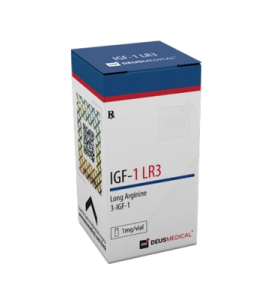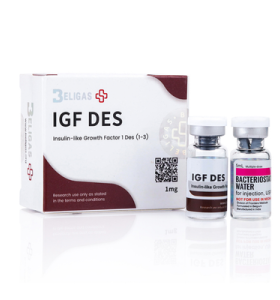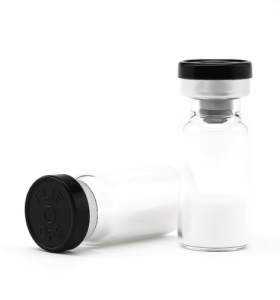



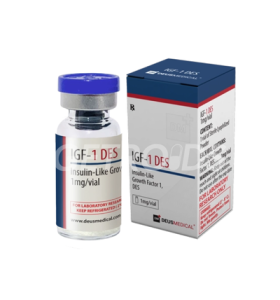
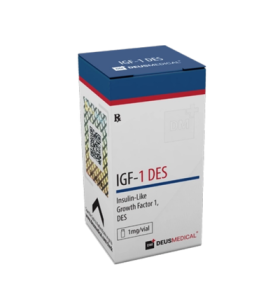
IGF-1 DES 1 Deus Medical
🔥 15% EXTRA DISCOUNT FOR DEUS MEDICAL🔥


 Ask us anything on Telegram!
 - Brand: Deus Medical
Shipping
$35 flat rate
Payment Methods
Crypto, Venmo, Zelle, Credit Card, WU
Secure Shopping
Your data is protected with the highest security standards.
⚠️ WARNING: Potential Risks of Anabolic Steroids
Anabolic steroids can have significant effects on the body and should only be used under proper guidance. Misuse or unsupervised use can lead to health complications. These may include hormonal imbalances, liver strain, cardiovascular issues, psychological effects, and more.
If you choose to use anabolic steroids, it is essential to do so responsibly and only obtain them from trusted, verified sources.
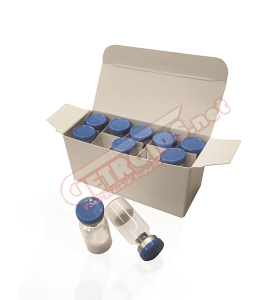
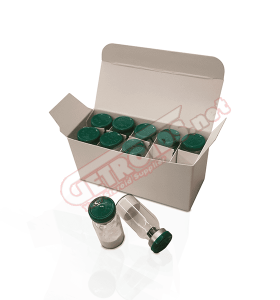
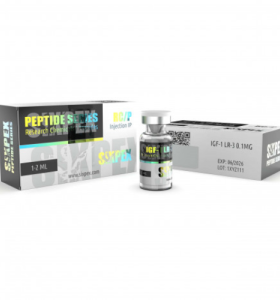
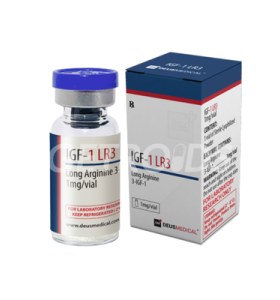
IGF-1 DES 1 Deus Medical
Active Component: Insulin-like Growth Factor 1 $\text{DES }1\text{-}3$ (IGF-1 DES)
Manufacturer: Deus Medical
Pack: 1 Vial x 1 mg
What Is IGF-1 DES?
IGF-1 DES is a shortened, highly potent variant of the natural Insulin-like Growth Factor 1 (IGF-1) hormone.1 IGF-1, or Somatomedin C, is a key growth factor primarily secreted by the liver upon stimulation by Growth Hormone ($\text{GH}$) and is central to anabolic activity in adults.
The $\text{DES }1\text{-}3$ modification means the first three amino acids of the full $70$-amino acid IGF-1 chain (the C peptide is composed of $12$ amino acids) have been cleaved. This modification gives IGF-1 DES two crucial advantages:
Increased Potency: IGF-1 DES is significantly more potent than standard IGF-1.2
Reduced Binding: It has a reduced affinity for Insulin-like Growth Factor Binding Proteins ($\text{IGFBPs}$) in the bloodstream, allowing it to act more readily at the target tissue site.
Core Performance Benefits
Localized Anabolism: IGF-1 DES is highly favored for localized muscle growth.3 Its reduced $\text{IGFBP}$ binding means it survives longer at the injection site, driving protein synthesis and inhibiting protein degradation directly in the targeted muscle.
Rapid Recovery: IGF-1 enhances recovery time after intense workouts, promoting tissue repair of bone, cartilage, skeletal muscle, and nerve cells.4
Fat Metabolism: It impacts fat cells, enabling fat breakdown, which contributes to a decrease in body fat and maintenance of lean body mass.
Energy and Wellness: Elevated IGF-1 levels enhance overall energy during exercise and contribute to general health and well-being.
Administration and Dosage Protocols
IGF-1 DES is typically administered via injection, often aiming for the muscle being trained.
Route: Can be injected subcutaneously into the fatty tissue (e.g., abdomen) or used via intramuscular injection (5$\text{IM}$) into the targeted muscle group for localized effects.6
Recommended Dosage (Men): $40 \text{ mcg}$ - $50 \text{ mcg}$ daily.
Recommended Dosage (Women): $10 \text{ mcg}$ - $20 \text{ mcg}$ daily.
Frequency: Injections are not to be taken more than twice a day.
Cycle Duration: A typical IGF-1 cycle is 2 to 12 weeks.
Side Effects and Management Essentials
Side effects are similar to full growth hormone but can be exacerbated by the component's potency.
Hypoglycemia: IGF-1 significantly reduces blood glucose, which can lead to hypoglycemia (low blood sugar). Users must consume adequate carbohydrates around the dosing time.7
Excessive Growth: Potential harm to joints, heart, and excessive body growth (acromegaly) are risks associated with long-term, high-dose use.
Cancer Risk: Researchers have linked elevated, chronic IGF-1 levels with potential increased risk for cancers (lung, breast, colorectal, and prostate).8
Frequently Asked Questions (FAQs)
1. What is the main advantage of IGF-1 DES over standard IGF-1?
The main advantage is potency and localized action. By cleaving the first three amino acids, IGF-1 DES is more potent and, critically, has a much lower affinity for $\text{IGFBP}$s.9 This means it remains active for a longer time at the injection site, driving $\text{IM}$ growth and repair more effectively than standard IGF-1.
2. Should IGF-1 DES be injected into the abdomen or the muscle?
IGF-1 DES is highly effective for localized growth.10 Therefore, it is often injected intramuscularly (11$\text{IM}$) into the specific muscle group that the user is seeking to grow or recover (e.g., into the biceps on arm day) to maximize site-specific hypertrophy.12 Subcutaneous injection is used for systemic effects.
3. Does IGF-1 DES require Post Cycle Therapy (PCT)?
No. IGF-1 DES is a growth factor peptide and does not suppress the body's natural production of testosterone or other sex hormones. Therefore, standard $\text{PCT}$ protocols using SERMs (like Nolvadex) are not required after an IGF-1 DES cycle.
4. What is the most critical side effect to manage during an IGF-1 DES cycle?
The most critical side effect to manage is hypoglycemia (low blood sugar). IGF-1 is structurally similar to insulin and has potent glucose-lowering effects.13 Users must ensure they consume adequate carbohydrates and monitor their blood sugar levels, especially around the time of injection, to prevent dangerous drops in blood sugar.14